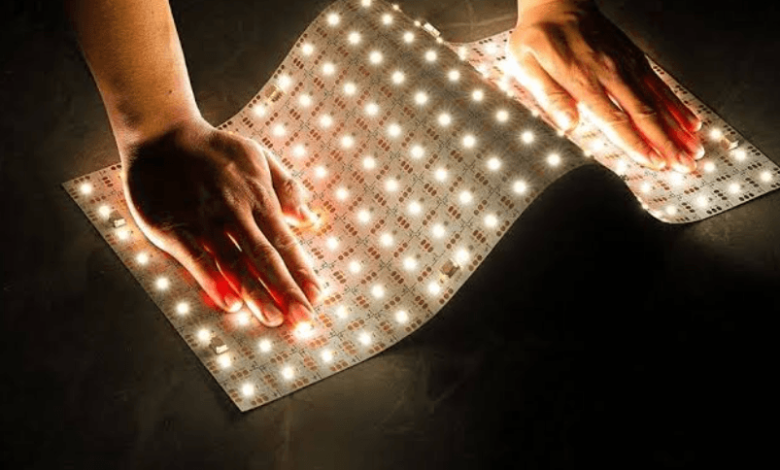
Choosing LED lighting for a project involves more than selecting a strip with the right brightness. The installation environment, voltage, waterproofing, LED density, color temperature, cutting length, and power requirements can all affect the final result. A product that works well for decorative indoor lighting may not be suitable for outdoor signage or a long architectural installation.
Understanding these differences before installation can help you achieve consistent illumination and avoid common issues such as voltage drop, uneven brightness, overheating, or premature product failure.
Understanding LED Strip Lights and Their Applications
LED strip lights are flexible lighting products that can fit into areas where conventional fixtures may be difficult to install. They are commonly used for cove lighting, architectural details, cabinets, corridors, windows, archways, signage, pathways, exhibitions, and home projects.
Different LED types provide different lighting characteristics. SMD5050 strips, for example, are available in various colors and configurations, while 3528 strips can provide a lower-power option for applications where moderate illumination is sufficient. COB LED strips are another option when a continuous appearance is important because their closely positioned light sources reduce the visible spotting that can occur with traditional LED strips.
The choice should depend on the actual application rather than the LED number alone. Brightness, power consumption, dimensions, color temperature, and installation conditions should all be considered together.
Important Factors Before Selecting an LED Strip
Voltage is one of the first specifications to check. Common low-voltage options include 12V and 24V systems. A 24V strip can be useful for longer runs because it generally experiences less voltage drop than a comparable 12V system. With excessive voltage drop, brightness can decrease toward the end of a long installation.
LED density also influences the appearance of the finished lighting. For example, a 5050 strip may contain 300 LEDs across five meters, while some 2835 products can contain 900 LEDs over the same length. Higher density can create more continuous illumination, but it can also increase power requirements.
Cutting length is another practical consideration. Some strips can be cut every 100mm, while others use different cutting intervals. Checking this specification before installation makes it easier to plan corners, sections, and custom dimensions.
For projects requiring a broad selection of configurations, buyers may compare products available as Wholesale LED Strip Lights according to voltage, LED type, waterproof rating, power, and intended application rather than choosing solely by appearance.
Waterproofing and Installation Environment
The installation location determines whether waterproof protection is necessary. Indoor applications may work well with non-waterproof products, particularly when the strip is installed in a dry and protected area. Outdoor installations, bathrooms, signage, and other exposed locations require greater attention to protection ratings.
Some 5050 LED strips are available with IP65 or IP68 protection. IP-rated products can provide additional protection against environmental exposure, but the appropriate rating should always match the actual installation conditions.
Installation also requires attention to the power supply. Before connecting a strip, verify that the power supply voltage matches the LED strip requirements. Incorrect voltage can damage the LEDs and create safety problems. Cable length and total power consumption should also be considered when planning the system.
How LED Modules Differ From LED Strips
LED modules serve a different purpose from flexible strips. They are often designed for backlighting applications where light needs to spread across a specific surface. Signage, channel letters, illuminated displays, and certain cabinets can benefit from module-based lighting.
Spacing between modules is particularly important. If modules are positioned too far apart, darker areas can appear on the illuminated surface. If they are placed too close together, the installation may consume more power than necessary. The depth of the sign or cabinet also affects how evenly the light spreads.
The best led module supplier should therefore be evaluated by more than product availability. Buyers should review specifications such as brightness, module spacing, voltage, waterproof protection, dimensions, consistency, and technical support. Clear product information makes it easier to match modules with the requirements of a particular sign or backlighting project.
Choosing Between 12V and 24V Systems
Both 12V and 24V LED systems have practical applications. A 12V strip can be suitable for smaller installations and projects where shorter sections are required. A 24V system can be more convenient for longer runs because the higher operating voltage helps reduce voltage drop.
Power planning remains important with either option. For example, a 5050 strip may have a maximum power of 17W per meter in one configuration, while other versions can reach higher total power levels. The power supply should be selected according to the strip’s actual wattage and the total length being installed.
Color, CRI, and Lighting Appearance
Color temperature affects how a space looks and feels. Warm white options around 2700K to 3000K can provide a softer appearance, while cooler white options are often preferred where a cleaner and brighter visual effect is required.
Some RGBW strips combine RGB colors with warm white. This allows users to create colored effects while retaining a practical white-light option. CRI is also worth checking when accurate color appearance matters, particularly in retail displays, interiors, showrooms, and decorative installations.
Installation Details That Affect Performance
Good installation practices can have a direct effect on LED performance. The mounting surface should be clean and suitable for the adhesive or mounting method being used. Some products include 3M adhesive backing for easier installation.
Heat management should also be considered, especially with higher-power strips. Aluminum profiles can help provide mechanical support and assist with heat dissipation. For outdoor installations, the enclosure and connections should also provide suitable environmental protection.
DekingLED, operated by Shenzhen Dekingled Co., Ltd., was established in 2014 and operates from SanMing Industrial Park in Shenzhen, China.
The company lists fast delivery, cost-effective products, technical support, and quality-focused manufacturing among its service advantages.
Building a Practical LED Specification Checklist
Before ordering or installing an LED lighting product, check the following details:
Voltage and total wattage should match the power supply.
LED density should suit the required brightness and visual effect.
Cutting length should fit the planned installation dimensions.
The IP rating should match the installation environment.
Color temperature and CRI should suit the intended space.
The strip or module dimensions should fit the available area.
Long installations should be checked for voltage drop.
Power connections should be planned before final mounting.
These details can prevent many installation problems and make the lighting system easier to maintain.
Final Thoughts
LED lighting selection becomes simpler when the product specifications are considered alongside the installation requirements. LED strips are useful for flexible architectural, decorative, and accent lighting, while LED modules can provide controlled illumination for signage and backlighting.
Instead of choosing based only on brightness or price, compare voltage, power, LED density, waterproofing, cutting length, color characteristics, and installation conditions. A careful specification check before purchase can help create more consistent lighting and a more reliable finished installation.