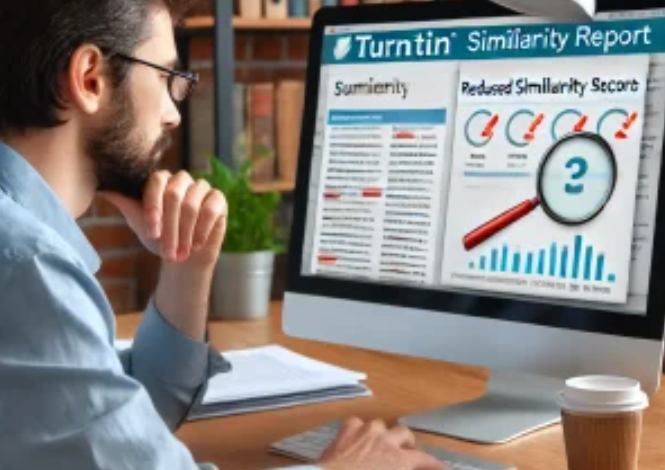
If you’ve ever submitted a paper or a research assignment online, chances are you’ve come across Turnitin. It’s that platform everyone talks about when it comes to checking for plagiarism. But honestly, understanding your Turnitin similarity score can be a bit confusing at first. Should you panic if your score is high? Or is a low score always a green light? Let’s break it down in a way that actually makes sense.
What Turnitin Similarity Really Means
First matters first, a Turnitin similarity rating isn’t always similar to a plagiarism accusation. It’s basically a degree of how much of your text matches different assets in Turnitin’s database. That consists of journals, web sites, pupil papers, and books. So if your essay has plenty of common phrases or citations, your similarity rating might be better than you anticipate.
A lot of college students suppose that a high rating mechanically means they’ve done something incorrect. Not real. Turnitin is simply flagging matching text. It’s up on your instructor or yourself to interpret whether or not those matches are virtually plagiarism or simply not unusual expertise.
Why Your Score Might Be Higher Than Expected
Sometimes, your Turnitin similarity score can look scary even if you’ve written everything yourself. Here are a few reasons why:
- Common Phrases: Some expressions or technical terms appear in multiple sources. Turnitin doesn’t know the difference.
- Quotations: Direct quotes, even when cited correctly, will often increase your similarity score.
- References and Bibliographies: Including a list of sources is necessary, but Turnitin will match those too.
- Paraphrasing: If your paraphrasing is too close to the original text, it might be flagged.
So, a high similarity score does not always mean academic dishonesty. It just means you need to look closer at what’s being flagged.
Tips to Lower Your Turnitin Similarity Score
Even though a high score isn’t automatically bad, most students want to aim for a lower number. Here are some practical tips:
- Paraphrase Effectively: Don’t just swap a few words. Rewrite ideas in your own voice. Imagine explaining it to a friend who has no background in the topic.
- Quote and Cite Properly: If you’re using someone else’s words, put them in quotation marks and provide a proper citation. This will show that you’re not trying to claim their work as your own.
- Avoid Overused Phrases: Check for sentences that are common in your field and try to express them differently.
- Use Original Examples: Incorporate your own thoughts, case studies, or examples. This adds originality and reduces matching text.
- Check Before Submission: Some schools provide a draft check. Take advantage of it to see what Turnitin will flag.
Interpreting Your Turnitin Report
Once you submit your paper, Turnitin will generate a report. Here’s how to make sense of it:
- Overall Similarity: This is the percentage that shows how much of your text matches other sources.
- Match Breakdown: Turnitin will list the sources of matching text. This is your chance to see if the flagged text is properly cited or needs rewriting.
- Color Coding: Often, Turnitin highlights sections with different colors. Red usually means a high match, orange is moderate, and green is low. But remember, color alone doesn’t indicate plagiarism.
Look at the report like a roadmap for editing your paper. Focus on the areas that are flagged and decide if they need rephrasing, quoting, or further explanation.
See also: Emerging Market Opportunities Dashboard: 960659512, 603224035, 5092041293
Common Mistakes Students Make
Even when you’re careful, it’s easy to slip up. Here are some mistakes to avoid:
- Over-relying on sources: If most of your paper is just a summary of other people’s work, your similarity score will naturally be high. Add your own analysis.
- Incorrect citations: Citing incorrectly can make Turnitin flag your text, even if you didn’t copy anything.
- Last-minute submission: Waiting until the last minute can make it hard to revise flagged sections. Start early so you can improve your originality.
Wrapping It Up
Turnitin similarity isn’t something to fear. Think of it as a device to help you recognize how your paintings pertain to present fabric. A high score doesn’t routinely suggest you’re in hassle, and a low rating doesn’t guarantee perfection. By paraphrasing neatly, mentioning assets properly, and adding your own ideas, you may submit your papers hopefully.
Next time you take a look at your Turnitin similarity rating, don’t panic. Take it as comments, not a verdict. With a touch of attention to elements and a focal point on originality, you’ll not only lower your rating but also enhance your writing average.
Your papers will emerge as searching for an extra expert, and you’ll sleep better understanding that Turnitin isn’t looking you down.